vol. 012026 edition8 hearths · 6 fusion arcs · 8 recipesfield journal · korean temple staysryan chun, hostest. 2026published from seoul · new yorkatlas pressvol. 012026 edition8 hearths · 6 fusion arcs · 8 recipesfield journal · korean temple staysryan chun, hostest. 2026published from seoul · new yorkatlas pressvol. 012026 edition8 hearths · 6 fusion arcs · 8 recipesfield journal · korean temple staysryan chun, hostest. 2026published from seoul · new yorkatlas press
back to the hearthstheme · adobe, chicha & quinoa
N°06 · in the fieldapril through the first frost

Andean.

Three thousand potatoes and a sun

Cusco & the Sacred Valleyperú
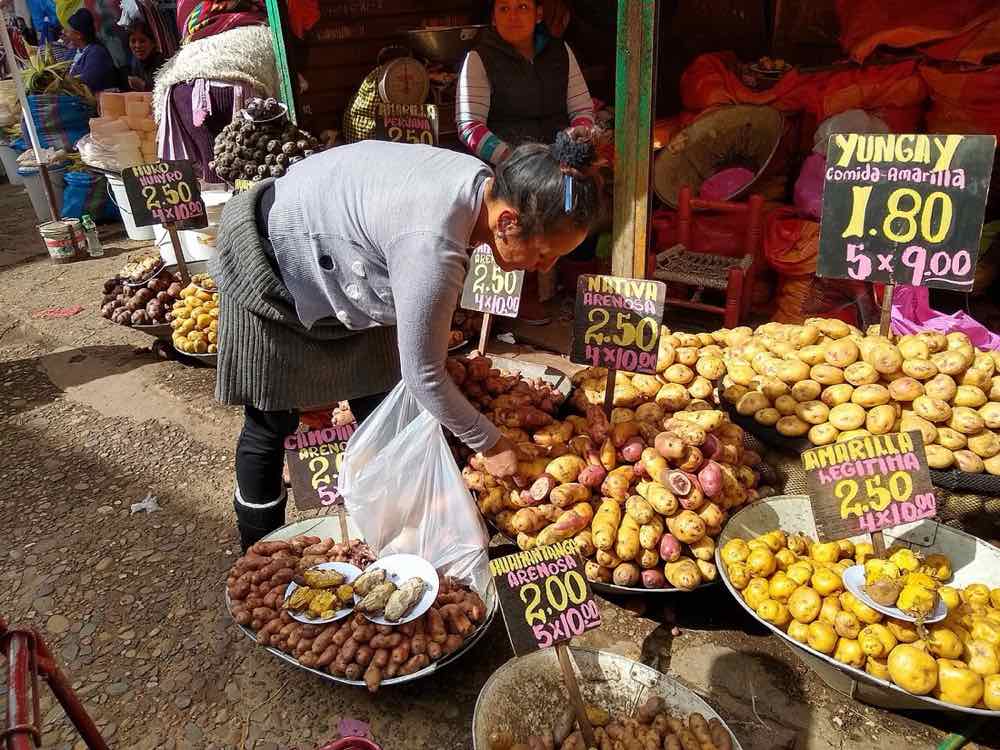
A market stall of Andean potato varieties.
Native potatoessun-dried adobe
Ayni

“Ayni — today for you, tomorrow for me.”

— The Quechua principle of reciprocal labour
folio n°01 · the hearth

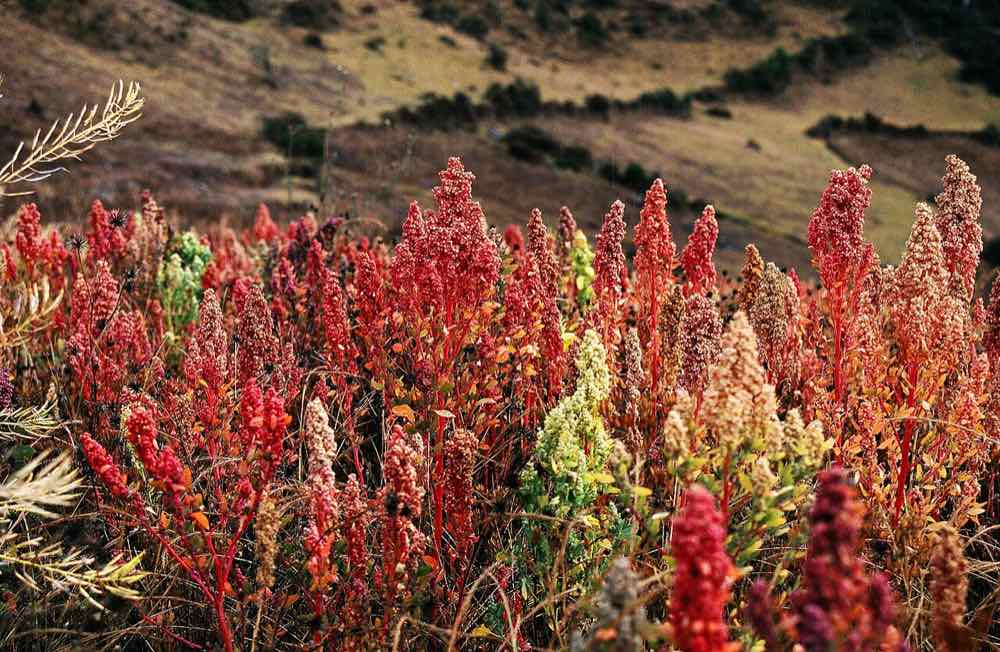
Sun-dried adobe, the purple of maíz morado and chicha morada, and the gold of a quinoa field at altitude.

The Andes stack climates on top of one another: within a day’s walk from a valley floor you pass through maize country, potato country and the high grasslands where llamas and alpacas graze. Andean food is built on that verticality. Around Lake Titicaca the potato was domesticated some eight thousand years ago; Peru still grows thousands of varieties. Cusco, the Inca capital, sits in the middle of it all.

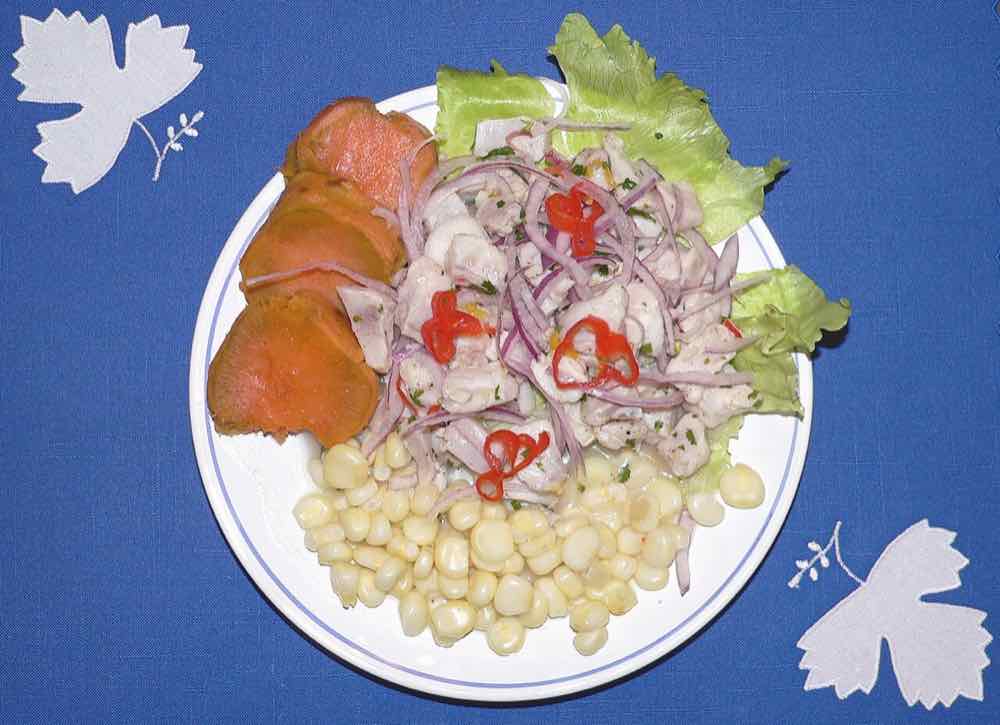
Ceviche with sweet potato and choclo.
Ceviche. Ceviche with sweet potato and choclo.
folio n°02 · anthropological roots

Where it comes from.

Papa nativa
Papa nativa
i

The vertical archipelago

The anthropologist John Murra described Andean societies as controlling a vertical archipelago — fields and herds spread across different altitudes, linked by kinship and exchange. Diet followed: maize from the valleys, tubers from the slopes, meat and wool from the puna.
ii

Storing the year

In the high Andes, potatoes are left out on frosty nights and trodden in the sun until they become chuño — freeze-dried tubers that keep for years. Meat is dried into ch’arki, the word English borrowed as “jerky”. The Inca state stored such foods in thousands of qollqa storehouses to feed its armies and labourers.

iii

Feeding the earth

Food is shared with Pachamama, the earth: a splash of chicha poured on the ground before drinking, offerings buried in August. Pachamanca cooks meat and tubers in a pit of hot stones — the earth as both oven and guest. Guinea pigs, domesticated thousands of years ago, are ritual and festive meat.

folio n°03 · how it evolved

A history, in 6 turns.

  1. c. 8000 – 5000 BCE

    Domestication

    Potato and quinoa are domesticated around the Titicaca basin; llamas and alpacas follow.

    Domestication
  2. 1400s – 1532

    Tawantinsuyu

    The Inca state builds terraces, storehouses and roads, moving food across its mountains on a scale few empires matched.

    Tawantinsuyu
  3. 1532 – 1700s

    Two-way exchange

    Wheat, beef, pork, onions, garlic and limes arrive; the potato leaves for Europe and changes its population. In Cusco’s cathedral, a 1753 Last Supper by Marcos Zapata shows a roast guinea pig on the table.

    Two-way exchange
  4. 1900s

    Migration and stigma

    Highland migrants move to Lima, where Andean food is looked down on as rural and Indigenous.

  5. 2000s – 2013

    The boom

    Peru’s gastronomic boom makes national cuisine a source of pride. The UN declares 2013 the International Year of Quinoa, and prices soar.

    The boom
  6. 2010s – now

    Cooking by altitude

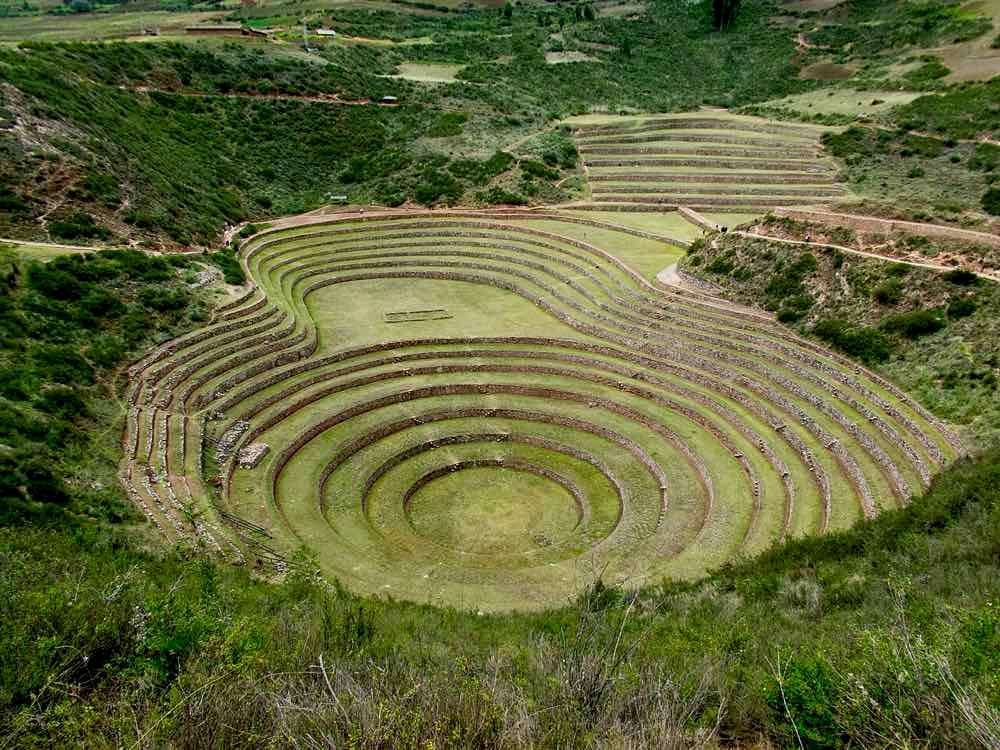
    Lima restaurants build tasting menus around altitude itself, and a restaurant opens beside the Moray terraces in 2018. Near Pisac, the Potato Park conserves native varieties as warming pushes the crops uphill.

    Cooking by altitude
folio n°04 · philosophy

Andean food is a long negotiation with altitude, frost and scarcity, carried out by communities that owe each other labour. Abundance is not natural there; it is organised.

01 · of 4

Verticality

Every altitude contributes something; a household or community reaches across several.

02 · of 4

Preservation as wealth

Chuño, ch’arki and dried maize turn a short harvest into a long year.

03 · of 4

Ayni and minka

Reciprocal and communal labour build fields, houses and feasts. The meal pays back the work.

04 · of 4

The earth eats first

Offerings to Pachamama come before the guest, and the earth oven is a ritual as much as a method.

folio n°05 · the main dishes

The plates, and how they changed.

PachamancaD·01

Pachamanca

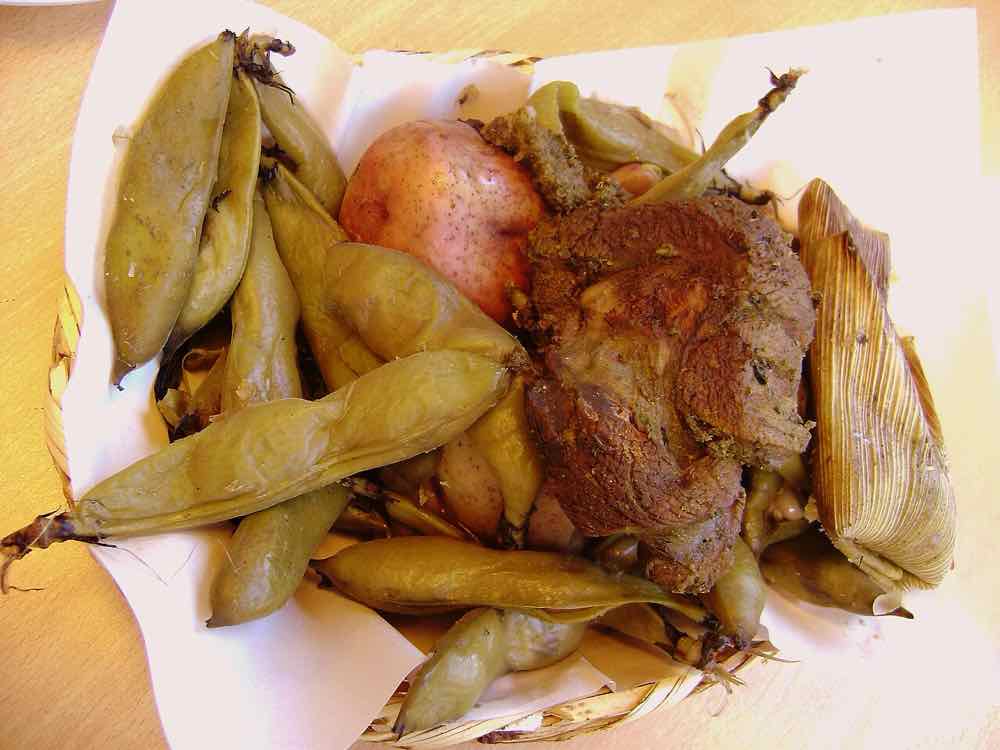
Meats, potatoes, broad beans and corn cooked under hot stones and herbs in an earth pit.

roots

Its Quechua name means “earth pot”. A communal technique for festivals and harvests.

how it changed

Now cooked for tourists and city weekends, sometimes in metal drums rather than the ground.

ChiriuchuD·02

Chiriuchu

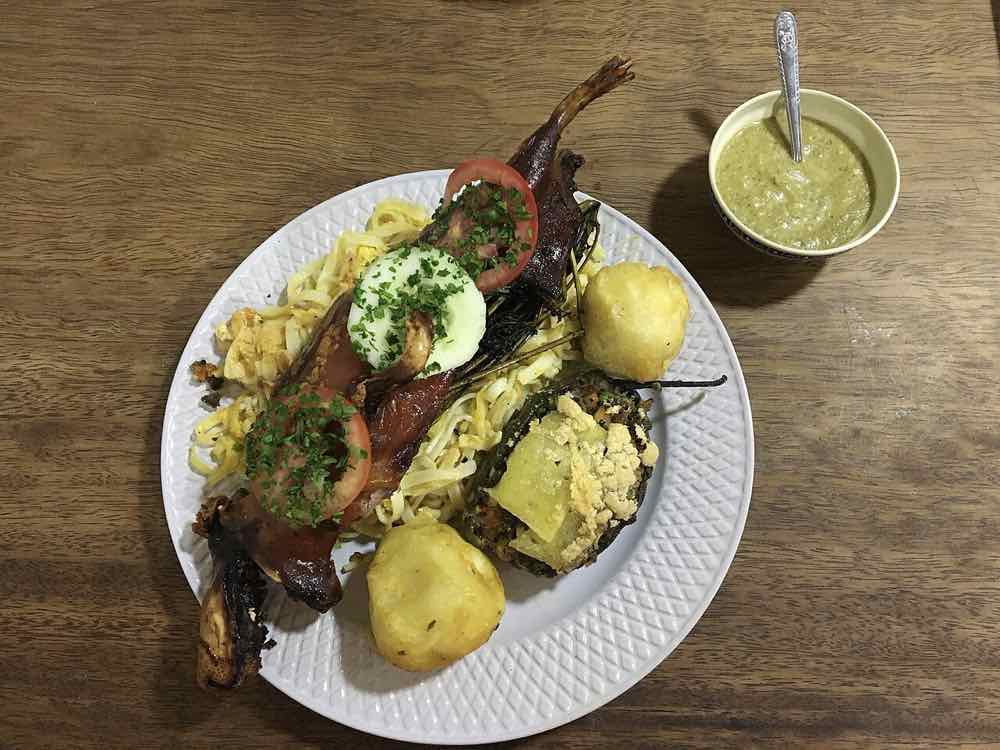
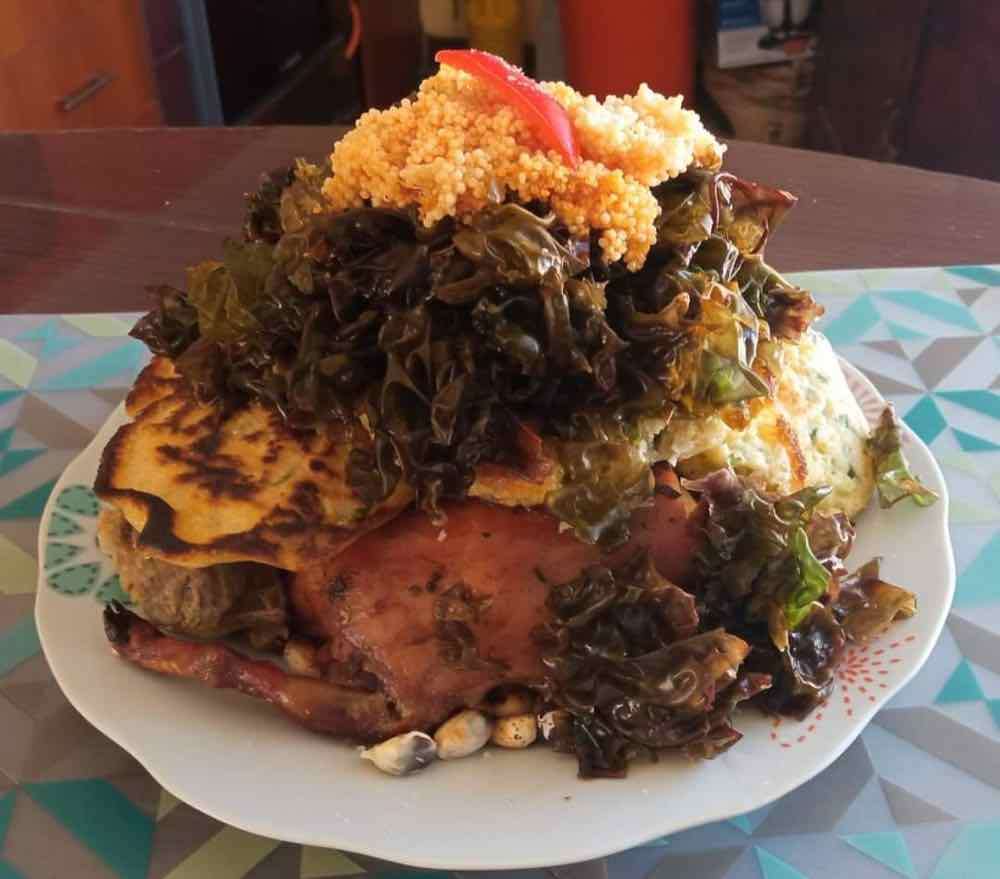
Cusco’s cold Corpus Christi platter: guinea pig, chicken, ch’arki, sausage, cheese, seaweed, fish roe, maize cake.

roots

Born when the Catholic feast of Corpus Christi overlaid Andean harvest rituals; ingredients come from coast, highland and Spain at once.

how it changed

Still made once a year in Cusco — a colonial collage that has itself become tradition.

CuyD·03

Cuy

Guinea pig roasted or fried flat, served whole.

roots

Domesticated in the Andes for food and healing rites; raised in kitchens and fed on scraps.

how it changed

A source of discomfort for outsiders and of pride for highland families; now farmed commercially and served to visitors as a dare.

Chairo with chuñoD·04

Chairo with chuño

A hearty highland soup of chuño, meat, wheat or barley and vegetables.

roots

Built on freeze-dried potatoes; an Aymara and Quechua dish of the altiplano.

how it changed

A daily food that is now also marketed as heritage cuisine in Puno and La Paz.

Chicha de joraD·05

Chicha de jora

A lightly fermented maize beer.

roots

Made by Inca chosen women for state ritual; poured to the earth before drinking. Chicherías marked their doors with a red flag.

how it changed

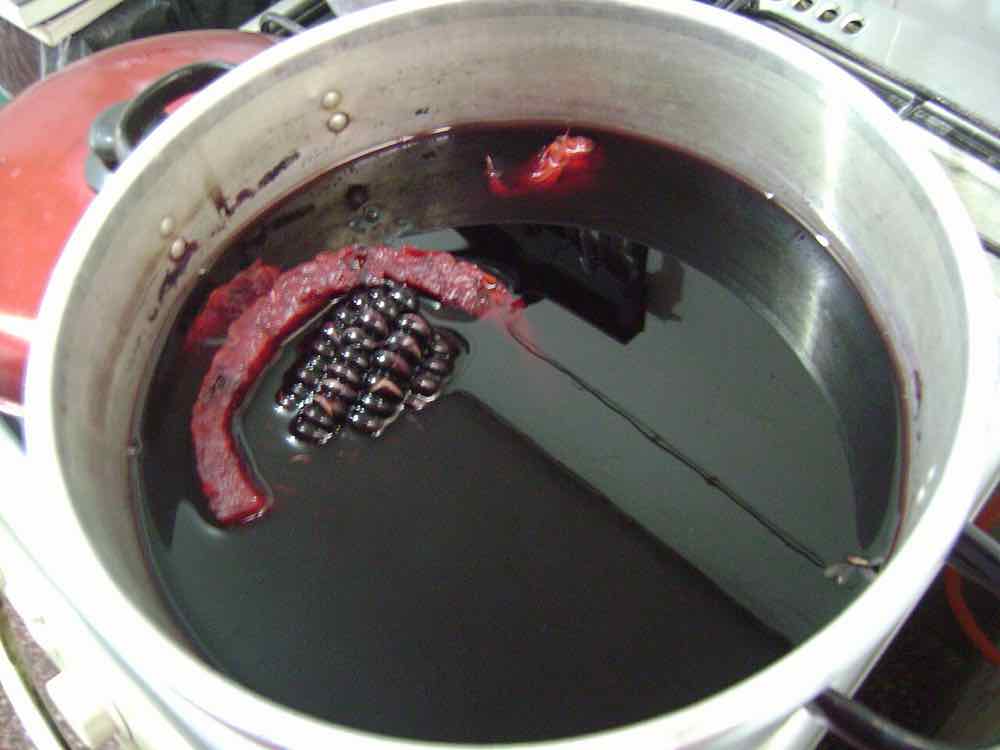
Once suppressed and stigmatised, it is now revived by brewers and chefs; its unfermented cousin, chicha morada, became a national soft drink.

folio n°06 · the larder

Ingredients, and their histories.

Papa nativa

Papa nativa

Thousands of native potatoes, in every colour and shape.

Domesticated near Lake Titicaca; carried to Europe in the sixteenth century.

Chuño & tunta

Chuño & tunta

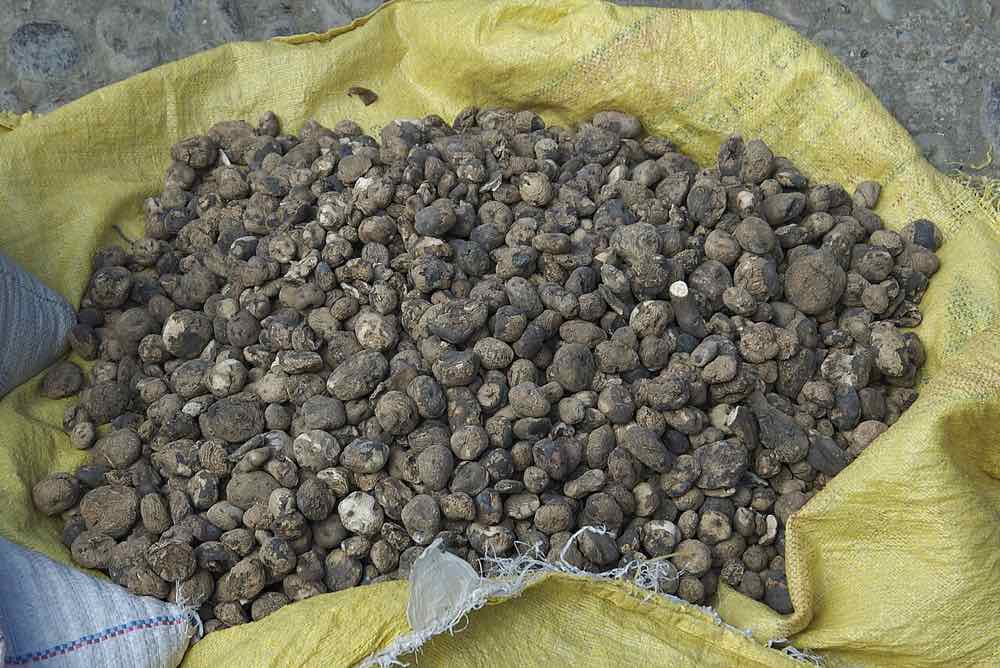
Freeze-dried potatoes — black chuño and white tunta.

A pre-Hispanic preservation technology that fed empires.

Quinoa

Quinoa

Grain of the high plains, eaten in soups and stews.

Once dismissed as poor people’s food, it became a global superfood in the 2010s.

Maíz

Maíz

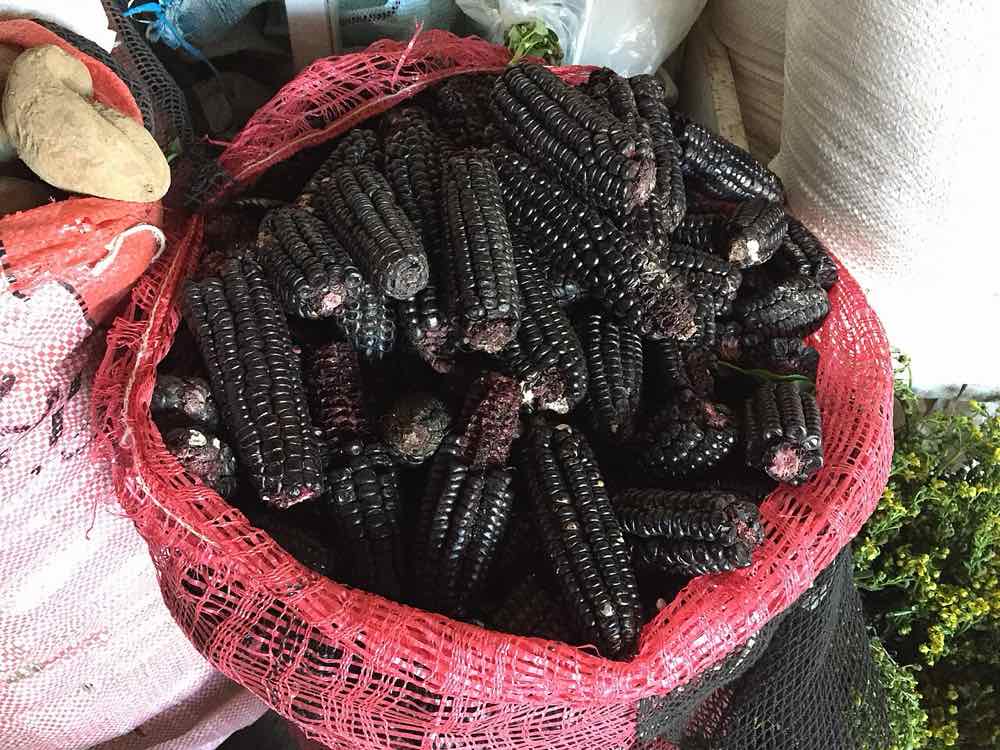
Giant white choclo, toasted cancha, purple maíz morado.

Grown on Inca terraces and turned into chicha for ritual and labour.

A

Ají & rocoto

Chillies that bring fruit and heat; huacatay brings green, minty perfume.

Native Andean chillies that later travelled into Peru’s coastal cooking.

folio n°07 · what it means

Andean food has moved from stigma to luxury in a single generation, often through Lima chefs who translate the highlands for international diners. The question is whether the farmers who maintain thousands of potato varieties share in that new value.

As temperatures rise, potato fields climb the mountains in search of the cold. The vertical archipelago, once a strategy for abundance, now measures a changing climate.

interviews in progress

This hearth is still in the field.

The Andean kitchen kept three thousand varieties of potato alive across five centuries. The Hearth opens February 2027 with Sacred Valley interviews.

folio n°08 · related fusions

Bridges from this hearth.

Tiradito of Yellow Potato

Nikkei tradition treats the Andean tuber the way Edo Tokyo treated fluke — sliced thin, dressed in citrus and aji amarillo. The fusion isn't new; it is the oldest documented arc on the Atlas.

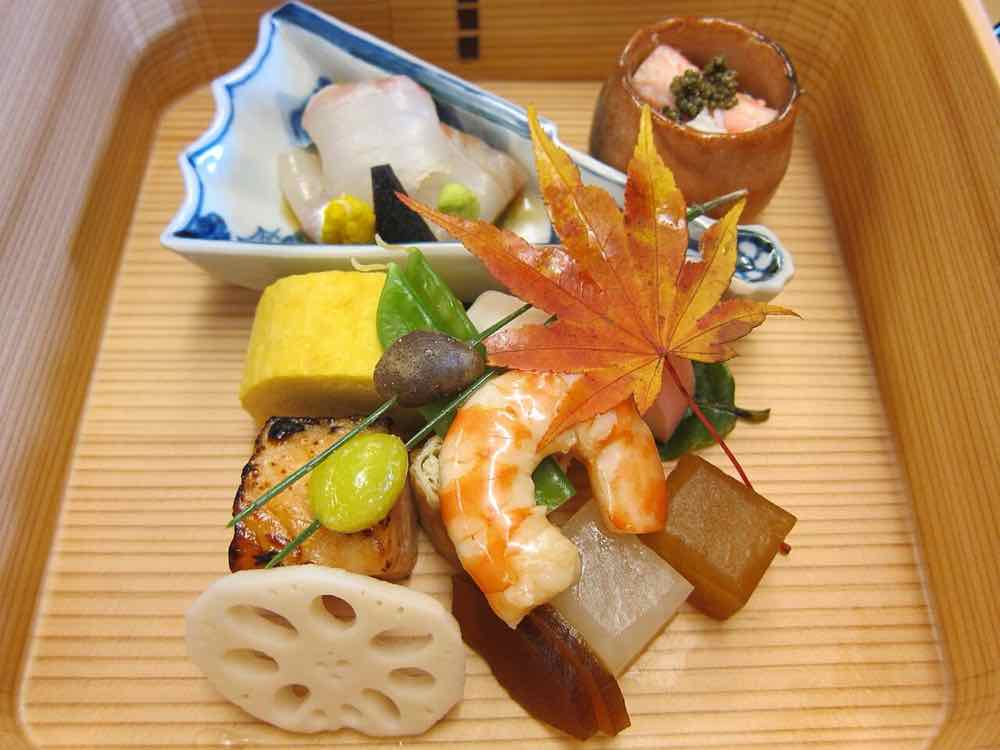
An autumn kaiseki course, maple leaf and lotus root.